

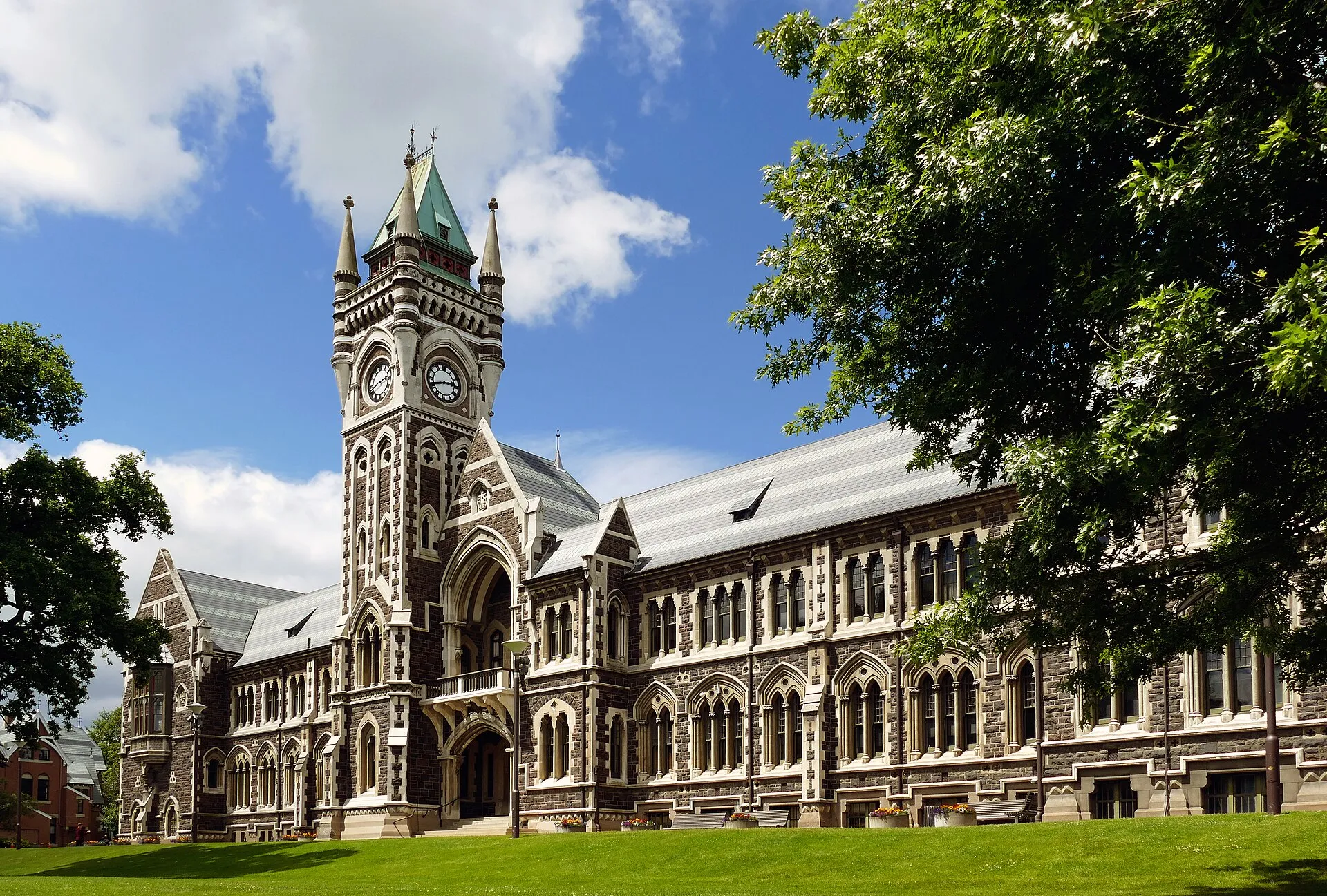
1. Key Advantages for Students
- Globally Accredited Qualifications: All eight New Zealand public universities rank in the top percentage globally for academic excellence and research output.
- Flexible Work Rights: International students can work legally up to 25 hours per week during study terms and full-time during official vacation periods.
- High Part-Time Income: With a minimum wage of NZD $23.95 per hour, students can earn steady income to support their day-to-day living costs.
- Post-Study Work Visa (PSWV): Graduates are eligible for a 1-to-3-year open work visa matching their qualification level.
- PR Pathways: Direct transition options to residency via the Skilled Migrant Category (SMC) for roles listed on New Zealand's official Green List (Engineering, ICT, Healthcare, Construction, Agribusiness).
2. Famous Universities & In-Demand Programs
- Top Institutions: University of Auckland, University of Otago, Victoria University of Wellington, University of Canterbury, Massey University, University of Waikato, Lincoln University, and Auckland University of Technology (AUT).
- Potential Subjects:
- Agribusiness & Food Science: Agricultural Science, Sustainable Forestry, Food Technology, and Wine Science.
- Information Technology: Software Engineering, Data Science, Cybersecurity, and Network Administration.
- Healthcare & Life Sciences: Nursing, Medicine, Pharmacy, Psychology, and Early Childhood Education.
- Engineering: Civil, Environmental, Construction Management, and Renewable Energy Systems.
3. Total Investment & Self-Funded Budgets
- 3 to 4-Year Graduation (Bachelor’s): Self-funded students should budget an estimated total of NZD $125,000 to $190,000 (~$78,000 to $118,000 USD), covering tuition (NZD $22,000–$35,000/year) and official living requirements (~NZD $20,000/year) across the program.
- 1.5 to 2-Year Master’s Degree: The total estimated budget ranges from NZD $70,000 to $105,000 (~$43,000 to $65,000 USD), covering full tuition and living expenses for the entire study duration.
4. IELTS & Entry Requirements
- Standard IELTS: Usually 6.0 overall for Bachelor's and 6.5 overall for Master's.
Opportunity for University Admission without IELTS
Although multiple international destinations offer alternative admission pathways in lieu of IELTS, these provisions are not standardized globally and vary depending on national regulations and institutional policies.
Key Requirements to Get an IELTS Waiver
When a university waives IELTS, they usually require one or more of the following credentials:
- Medium of Instruction (MOI) Certificate: An official letter from your previous college or university confirming that your degree program was taught and assessed entirely in English.
- High Secondary School English Marks: Strong grades in English (typically 65%–80% or above) on your Higher Secondary Certificate (HSC), A-Levels, or equivalent national exams.
- Internal University Assessment: Passing an online internal test, a password exam, or a viva/interview conducted directly by the university's admissions team.
- Alternative English Proficiency Tests: Submitting scores from faster, online-friendly platforms such as the Duolingo English Test (DET), Oxford ELLT, or PTE Academic.
Online English Test by the University
An Internal Online English Test conducted by a university is a recognized alternative to traditional standardized exams like IELTS, TOEFL, or PTE. It allows international applicants to demonstrate their English language proficiency directly through the institution's admissions system.
How University Online English Tests Work
Instead of registering with a third-party testing agency, candidates take an assessment designed, managed, or approved by the university itself.
- Testing Format: Tests are usually computer-based and assess the four core skills: Listening, Reading, Writing, and Speaking.
- Delivery: Administered securely online through the university's portal or partner platforms (e.g., Oxford ELLT, Password Skills Test, or internal Zoom/Teams sessions).
- Proctoring: Monitored live by a human examiner or through AI-driven proctoring software (screen sharing, webcam recording, 360° room scan) to ensure academic integrity.
Key Components of the Assessment
A university’s internal online English assessment evaluates an applicant’s language proficiency across four fundamental components: Reading, Listening, Writing, and Speaking.
The evaluation begins with the Reading Comprehension module, which tests the candidate’s ability to analyze written academic text, understand main ideas, and grasp complex sentence structures and vocabulary. Complementing this is the Listening component, where applicants listen to audio recordings of academic lectures and everyday campus conversations, answering questions to demonstrate their oral comprehension and ability to follow spoken English in real-time.
The assessment then transitions to Writing, requiring candidates to produce short essays or structured responses. This section measures grammar, vocabulary range, logical organization, and overall written expression. Finally, the test concludes with a live Speaking section—conducted as a virtual interview or viva voce with an examiner—to assess verbal fluency, pronunciation, and the applicant's ability to communicate naturally in an academic setting.
- Written & Receptive Skills (Automated or Timed):
- Reading & Grammar: Multiple-choice questions testing passage comprehension, vocabulary, and sentence structure.
- Listening: Short audio recordings, academic discussions, or lectures followed by comprehension questions.
- Writing: An online essay (typically 250–400 words) or short-answer prompt to evaluate clarity, coherence, and grammar.
- Speaking Skills (Live Evaluation):
- A 15-to-20-minute video interaction with a university instructor or examiner.
- Includes a self-introduction, discussion on general/academic topics, and questions expanding on your written essay submission.
Advantages vs. Considerations
| Advantages | Key Considerations |
|---|---|
| Cost-Effective: Often free or significantly cheaper than standard IELTS/TOEFL fees. | Non-Transferable: The test score is generally valid only for the issuing university and cannot be sent to other institutions. |
| Fast Results: Scores and evaluations are processed quickly (typically within 48 to 72 hours). | Strict Tech Rules: Requires a stable internet connection, functional webcam, microphone, and a private room. |
| Convenience: Taken from home without needing to travel to a physical test center. | Limited Retakes: Most universities permit only one attempt per admission cycle. |
Preparation Essentials
- Verify System Requirements: Test your desktop/laptop camera, microphone, and internet speed ahead of time.
- Review Your Writing: Be prepared to discuss your writing sample during the live speaking interview, as examiners often ask follow-up questions to confirm authorship.
- Practice Spontaneous Speaking: Focus on clear pronunciation and structured answers rather than memorized responses.
Important Things to Remember
- Recency Rules: Medium of Instruction (MOI) waivers are generally valid only if your last degree was completed within the last 2 to 5 years.
- Subject Exceptions: Professional degree programs like Nursing, Medicine, Law, or Education often still require standard language tests (like IELTS Academic or OET) due to regulatory board mandates.
- Preparation: An internal university interview or written assessment carries the same weight as an official IELTS test; failing the internal test can delay or forfeit the offer letter.
Detailed Living Cost Breakdown (Australia & New Zealand)
Immigration authorities in both countries set strict minimum living expense requirements for visa approval to ensure students can cover essential day-to-day expenses.
Australia Living Expenses
- Official Visa Living Fund Requirement: AUD $29,710 per year (~AUD $2,475 per month) set by the Department of Home Affairs.
- Weekly Expense Breakdown:
- Accommodation (Shared Flat / Student Housing): AUD $200 – $400 / week
- Groceries & Food: AUD $100 – $180 / week
- Utilities & Internet: AUD $30 – $60 / week
- Public Transport (with student discount): AUD $30 – $50 / week
- Personal & Entertainment: AUD $50 – $100 / week
New Zealand Living Expenses
- Official Visa Living Fund Requirement: NZD $20,000 per year (~NZD $1,667 per month) required by Immigration New Zealand (INZ).
- Weekly Expense Breakdown:
- Accommodation (Shared Flat / Homestay): NZD $150 – $300 / week
- Groceries & Food: NZD $90 – $140 / week
- Utilities & Mobile/Internet: NZD $25 – $50 / week
- Public Transport: NZD $25 – $45 / week
- Personal Expenses: NZD $40 – $80 / week